
HPG: Freelancer Freedom (USA)

Freelancer Freedom
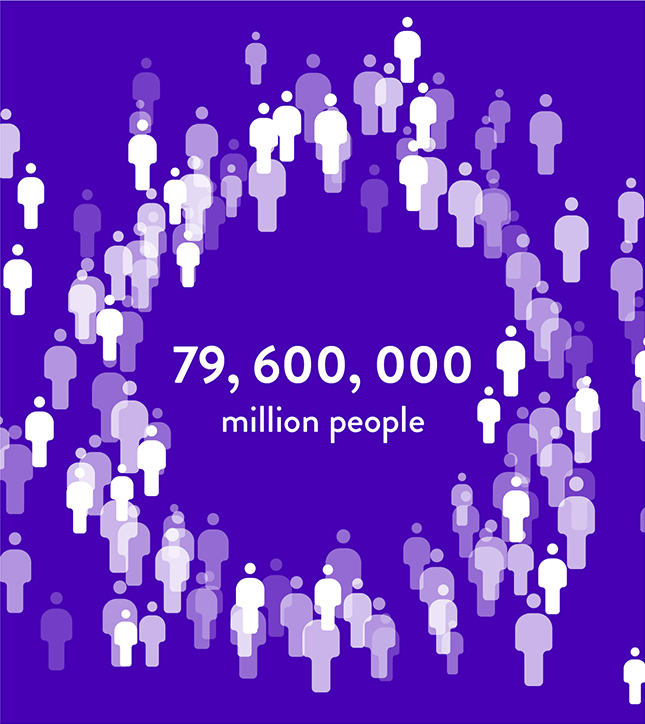
By 2025 the freelance workforce will boast 79.6 million Americans, representing nearly half of the country’s labor market. This surge is transforming how businesses operate and interact with their workforce, and with more than 3 million/year new freelancers boosting these numbers, this need will only increase.
With freelancers making up a significant portion of their workforce, brands are focusing on creating a sense of belonging and loyalty from the start. Promotional products have played a long and successful role in bolstering employee engagement, creating quick, lasting, proven and cost-effective solutions.
We polled industry experts on the relevancy of this 2025 megatrend in their region, and this is what we saw (visualization hint: the darker the green shading, the more relevant the trend was in that region)
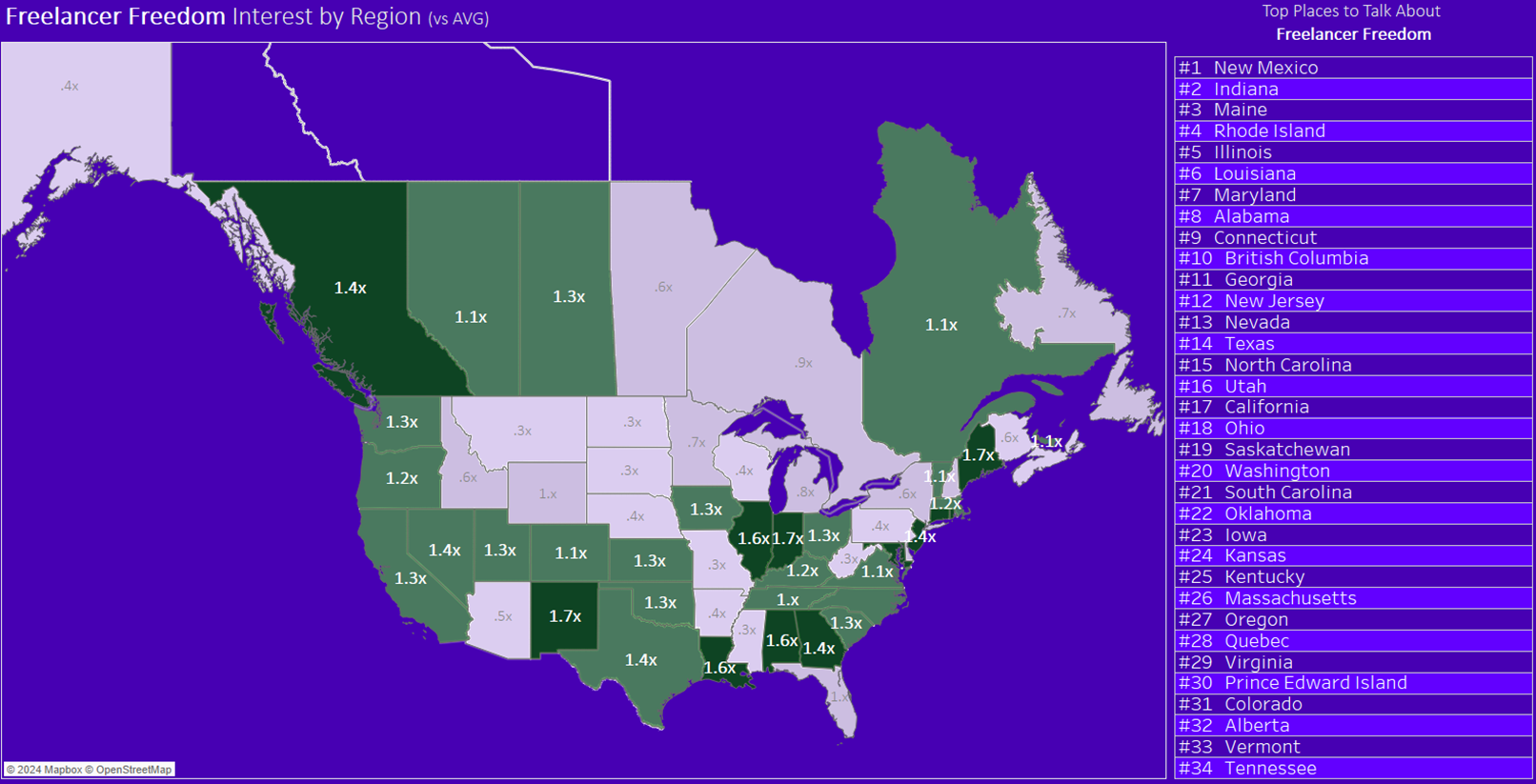
These megatrends was identified by taking retail research data (Mintel, Euromonitor, McKinsey), promotional product industry data (sales, clicks, presentations, etc.), internet and social media trend, which were then blended in an AI model to find the through-lines between them. Next, we took them to our industry partners to gauge the relevance (expressed in the visual above.)
That process also defined the types of products most suited to this trend. These include;
Interested in more data explaining this trend?
| Year | Number of Freelancers | Change |
|---|---|---|
| 2017 | 57.3 million | - |
| 2018 | 59.7 million | ↑ 2.4 million |
| 2019 | 62.2 million | ↑ 2.5 million |
| 2020 | 64.8 million | ↑ 2.6 million |
| 2021 | 67.6 million | ↑ 2.8 million |
| 2022 | 70.4 million | ↑ 2.8 million |
| 2023 | 73.3 million | ↑ 2.9 million |
| 2024 | 76.4 million | ↑ 3.1 million |
| 2025 | 79.6 million | ↑ 3.2 million |
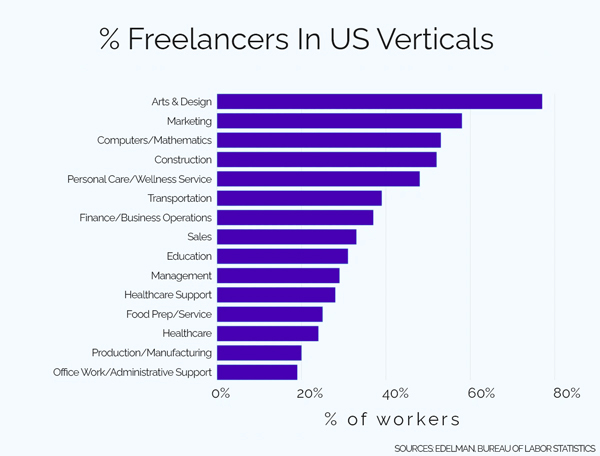
Which industries have the highest percentage of freelance employees, often working remotely? The graphic design, marketing, and IT support industries lead the way.
| Generation | % Who Have Freelanced |
|---|---|
| Gen Z (18-22 yo) | 50% |
| Millennials (23-38 yo) | 44% |
| Gen X (39-54 yo) | 30% |
| Baby Boomers (55+ yo) | 26% |